The territory of the National Park of Alta Murgia, established by DPR10/03/2004, occupies an area of about 68,000 hectares. The priority habitats at community level present on the high Murgia are the Prairies on calcareous substratum (Festuco-Brometalia) with stupendous blooming of orchids and the substeppic Paths of gramineas and annual plants (Thero-Brachypo- dietea), there are also Querceti di Quercus trojana and limestone slopes of Mediterranean Greece.
A census conducted on the territory of the high Murgia counted more than 1,100 spontaneous species, this value represents about 25% of the 6000 species present on the entire national territory.
Habitats present in the Alta Murgia
They are arid prairies dominated by grasses, on substrates of various nature, often calcareous. These prairies are dominated by annual grasses such as the annual fairy flax (Stipa capensis) and the paleo (Trachynia distachya), This habitat usually dominates the lower altitudes of the Park area, or flanks the sub-Mediterranean arid prairies with a Balkan footprint at higher altitudes.
The habitat corresponds to sub-Mediterranean arid prairies of the order Scorzoneratalia villosae (scorzonero-chrysopogonetalia).
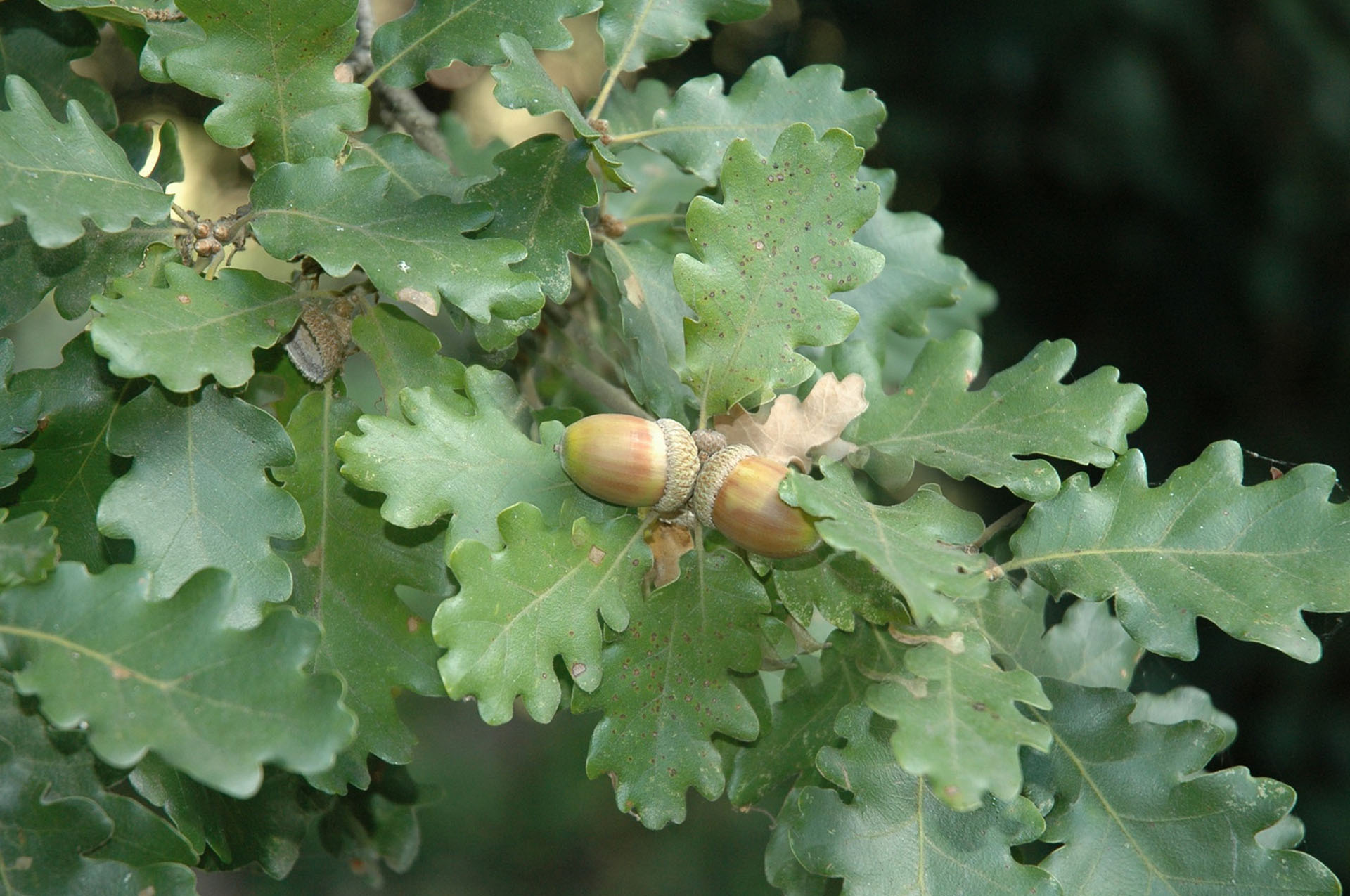
Part of this habitat are Mediterranean and sub-Mediterranean Adriatic woods dominated by Quercus virgiliana, Q. dalechampii, Q. pubescens s.l. and Fraxinus ornus. are found in particular along the separation escarpment between the Murgia alta and the Murgia Bassa that turns towards the Adriatic.
The habitat corresponds to woods adapted to warm-arid to cooler, pure or mixed conditions, to Quercus trojana and Quercus virgiliana at times with the presence of Carpinus orientalis. The Fragno is dominant in the residual forest formations of Murgia Materana and Laertina and in the south-eastern Murge. In the Parco dell’alta Murgia the fragno occupies limited areas.
The presence of small vertical rocky outcrops, causes some species of particular rarity to appear such as Campanula versicolor, Carum multiflorum and Aurinia saxatilis spp. megalocarpa.
In the Park there are different types of environments that very often are interspersed with each other giving rise to a real “mosaic”, the main environmental types of the Park are:
Among the most diffused species stand out: the now more and more rare shrubby thyme (Thymus capitatus), the thorny thyme (Tymus spinulosus), rare endemism of Southern Italy, the eliantemo jonico (Helianthemum jonium), endemic to Puglia and Basilicata with separation of the range in Romagna, the rare silver sage (Salvia argentea), the mountain savory (Satureia montana), the linen of Tommasini (Linum tommasini), especially the very rare lyric, known in Italy for Friuli and Veneto, Apulia and Basilicata is the spiny spurge (Euphorbia spinosa) that with its hemispherical cushions is mainly spread in the high and windy areas.
Quite frequent in these environments are also the neophytes. Among the most common are the Thomas saffron (Crocus thomasii), the endemic Basilicata onion (Gagea chrysantha), the rare Muscat garlic (Allium moschatum), the Sicilian iris (Iris pseudopumila), the endemic Adalgisa hen milk (Ornthogalum adalgisae) and many others. In the pseudosteppe cenoses, where the pasture has been abundant in the past and where the substratum is compact and asphyxiated, abundant species are found such as the Mediterranean asphodel (Asphodelus microcarpus), the ferula (Ferula comunis), the yellow asphodel (Asphodeline lutea), the marine scilla (Marine urginea), all species that are not appetite from the cattle.
Very diffused and often of remarkable extension are the xerograminetes that constitute real steppe prairies in which the dominant species are the grasses belonging mostly to the genus Stipa. Among the most present we remember: the endemic Mediterranean fairy flax (Stipa austroitalica), the rare fairy flax of Lagasca (Stipa fontanesi), the annual fairy flax (Stipa capensis), the Mediterranean poodle (Cymbopogon hirtus), the common waxy (Aegilops geniculata) and many others.
The entire escarpment of the Murgia Materana is affected by the unique presence of imposing erosive grooves similar to canyons that affect the thick base of Cretaceous limestone. These ravines are commonly known as “ravines” and the most imposing features have steep overhanging walls, incredibly shaped by millennial erosion, with spires, pinnacles, caves and caves, a unique scenario in which the rupestrian civilization flourished.
These canyons constitute for many rare species a highly conservative environment, in the sense that they have played for millennia the function of custodians of floristic entities of ancient origin that, disappeared elsewhere due to changed conditions, there survive as real living fossils, relics of archaic flores. Some of these species called by the “amphiadriatic” phytogeographers are present and abundant even along the opposite Adriatic coast of former Yugoslavia, of Albania and Greece and spread in Italy only in some regions bordering the Adriatic Sea including Puglia and Basilicata limited to the territory of Matera. They are part of this contingent of flora species such as the rare Kummel of Greece (Carum multiflorum), the splendid Apulian bell (Campanula versicolor), the elegant Apulian scrofularia (Scrophularia lucida), the delicate and rare saxicolous alism (Aurinia saxatilis)the Sicilian atamanta (Athamanta sicula), the rare southern raponzolo (Asyneuma limonifolium), all species with a Balkan centre of gravity range and separation in Puglia and Basilicata in Matera.
In the rocky flora there are also prestigious and rare endemics such as the Gargano cornflower (Centaurea subtilis), an exclusive species of the Gargano and the Murge between Laterza and Matera, Otranto and Sila; the Basilicata vedovine (Centaurea centauroides), showy and rare endemic to the clay substrates also present in the Park area.
The territory of the Murgia Park shows a natural environment that strikes for its beauty marked by rocky walls, gorges and blades, which are presented one after the other, in a continuity such as to accommodate a very rich fauna that, thanks to the presence of wild and inhospitable areas have limited the anthropization of the territory to the advantage of a fauna that instead has found the ideal conditions for its survival. Between the garrigue and the Mediterranean scrub, in the remaining groves of oak and fragno, hides, in addition to the interesting rock flora, a rich and picturesque fauna.
Near the ravine and the wetlands you can see the river nightingale and the wren, which live hidden among the vegetation of willows and marsh straws. The wren, is small and very similar to a ball, with the brown-reddish plumage and very thick, and the tail typically kept up. It feeds mainly on larvae, insects and berries.
The porcupine is a strictly vegetarian rodent that inhabits the lush Mediterranean scrub and feeds on roots, fruits and soft barks, of which the Murgia is rich. It is an animal that moves mainly at night, so it is easier to spot its quills perhaps close to the den, it is therefore very rare to meet this rodent with a robust build surmounted by the long white and black spines.
In the so rich and variegated could not miss the reptilians like the Colubro Leopardino, which takes its name from the characteristic colouration in the upper part, with spots of red-yellow or blood-red leopard skin, or the Biacco, the Cervone, The Collared Snake and the Common Viper.
Martens, foxes, badgers and hedgehogs usually walk along the paths of the park, which offer hospitable places with little anthropization.
The plateau of the murgia hosts an incredible ornithological fauna that enlivens the skies of the Murgia Park: the Egyptian vulture, the smallest European vulture. has found an ideal habitat is recognized by the characteristic off-white plumage, with a shaggy collar; the snout is orange yellow, this bird has a particular capacity: in fact, to break the eggs it uses a stone held in the beak, although it seems that such behavior is not innate but learned and handed down.
The Murgian aviofauna also includes Buzzards, Royal Kites, Bianconi and Lanari Hawks, almost all feed on mice, vipers, frogs, which is very easy to find in these places. Many of them are nesting, and some prefer the rocky crevices for the laying of eggs and find, among the vast rocky walls of the Gravina, the ideal place for laying the same eggs. A special mention goes to the Falco Grillaio, symbol of the park, which usually winters in the Park and can be observed during hunting when with the characteristic position of the “Holy Spirit”, from above points the prey is thrown on the victim.